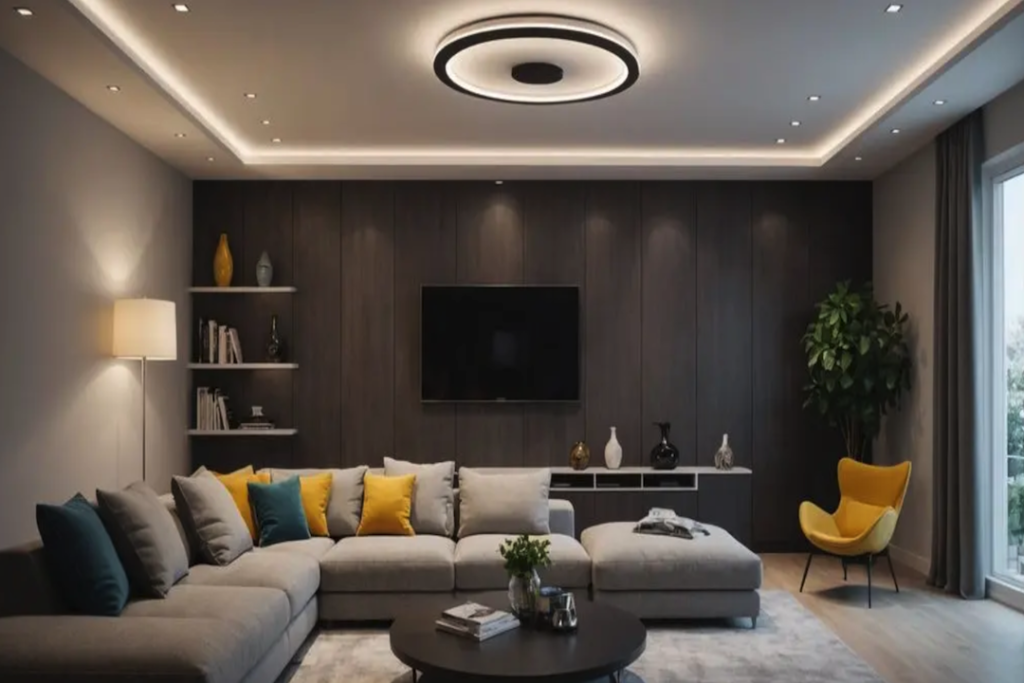

Finding the right ceiling light for a small bedroom can feel like a mini quest. The main goal is to pick something that brightens the space efficiently without making it feel even smaller or cluttered. You want a light that offers good illumination, looks nice, and doesn’t take up too much visual real estate. Think practical – a light that works well and fits the room’s vibe without being a dominant feature.
When you’re dealing with a compact bedroom, Maruzone lighting isn’t just about brightness; it’s about making the most of every inch. A poorly chosen light can make a small room feel dim and cramped, while the right one can create an illusion of space and make the room more functional and pleasant.
Importance of Scale and Placement
The first rule of thumb: scale matters. A large, elaborate chandelier might look fantastic in a spacious master suite, but in a small bedroom, it’ll likely overwhelm the space and make the ceiling feel lower than it is. Opt for fixtures that are proportionate to the room’s dimensions.
Placement is equally critical. A central ceiling light is usually your primary source of ambient light. Ensure it’s positioned to distribute light evenly across the room, reducing shadows and dark corners that can make a small space feel even smaller. Sometimes, off-center placement or multiple smaller lights can be more effective than a single, large one.
Beyond Brightness: Lumen Output and Warmth
Don’t just think “bright.” Think “right amount of bright.” For a small bedroom, you generally want enough lumens to comfortably read, dress, and move around, but not so much that it feels like an operating theater. As a rough guide, aim for about 20 lumens per square foot. So, a 100 sq ft room would need around 2000 lumens.
Light temperature also plays a significant role. Warm white (2700K-3000K) typically creates a cozy, relaxing atmosphere, which is ideal for a bedroom. Cooler temperatures (4000K-5000K) are more energizing and might be suitable for task lighting, but for overall ambient lighting, they can feel stark in a small, intimate space.
Dimmer Switches: A Small Room’s Best Friend
This isn’t a light fixture itself, but it’s an absolute game-changer for small bedrooms. A dimmer switch allows you to adjust the light intensity based on your needs – bright for getting ready, dim for winding down. This versatility is invaluable in a small space where a single light might serve multiple functions throughout the day and night. It allows you to transform the mood of the room instantly.
Flush Mount and Semi-Flush Mount Fixtures
These are often the go-to choices for small bedrooms, and for good reason. They sit close to the ceiling, minimizing their visual impact and maximizing headroom.
The Lowdown on Flush Mounts
Flush mount lights attach directly to the ceiling with little to no gap. They’re discreet, practical, and a solid choice if you have a low ceiling or simply want the light to blend in rather than stand out.
- Compact Design: Their primary advantage is their low profile. They don’t hang down, which is essential in rooms with lower ceilings (under 8 feet) or where you want to avoid anything that could make the room feel cluttered.
- Even Illumination (with the right design): Many modern flush mounts are designed to provide wide, diffuse light, which is great for general ambient lighting in a small space. Look for models with frosted diffusers to soften the light and prevent harsh shadows.
- Aesthetic Versatility: While often seen as purely functional, flush mounts come in a vast array of styles, from simple, minimalist discs to more decorative designs with unique finishes or patterns. You can find options that complement almost any decor without being visually obtrusive.
- Installation: Generally straightforward, as they simply attach to the electrical box in the ceiling.
Semi-Flush Mounts: A Bit More Flair
Semi-flush mount lights drop down a few inches from the ceiling, creating a small gap between the fixture and the surface. This slight drop can offer a bit more design flexibility and a different lighting effect.
- Enhanced Design Potential: The small gap allows for more intricate designs, sometimes incorporating multiple bulbs or decorative elements that wouldn’t be possible with a true flush mount. This can add a touch of elegance or character without being overbearing.
- Light Dispersion: The gap can allow light to reflect off the ceiling, creating a softer, more ambient glow that can make a small room feel slightly larger and less “closed-in.” It can also reduce the direct glare that some flush mounts might produce.
- When to Choose: Ideal for rooms with standard ceiling heights (8 feet or slightly above) where you want a little more visual interest than a flush mount but still need to conserve headroom. Be mindful of how far they hang – generally, you want at least 7 feet of clearance from the floor to the bottom of the fixture.
- Considerations: Make sure the gap between the fixture and the ceiling is easy to clean. Dust and even small insects can accumulate there.
LED Integration: Smart and Efficient
Many flush and semi-flush mounts now come with integrated LED lighting. This is a brilliant choice for small bedrooms.
- Energy Efficiency: LEDs use significantly less energy than incandescent or halogen bulbs, saving you money on your electricity bill.
- Long Lifespan: LEDs last much longer, meaning fewer bulb changes – a definite plus for ceiling fixtures that can be a bit of a hassle to access.
- Slimmer Profiles: Integrated LEDs often allow for even sleeker, thinner designs for flush mounts, which is a major benefit in small spaces where every inch counts.
- Color Temperature Options: Many integrated LED fixtures offer tunable white light, allowing you to switch between warm and cool tones, or even full RGB color control via a remote or app. This adds incredible versatility to your bedroom’s ambiance.
Recessed Lighting (Pot Lights)
If you’re willing to do a bit more installation work, or if you’re building/renovating, recessed lighting is an excellent choice for a small bedroom. It’s the ultimate ‘invisible’ light source.
The Beauty of Subtlety
Recessed lights are installed directly into the ceiling, meaning the light source is flush with the surface, and usually, only a trim ring is visible. This complete lack of protrusion makes the ceiling appear uncluttered and higher.
- Maximizing Headroom: This is their undisputed superpower. There’s nothing hanging down, so the entire ceiling plane is clear, creating a sense of spaciousness.
- Clean, Modern Aesthetic: Recessed lights provide a very streamlined look, perfect for modern or minimalist décors. They disappear into the ceiling, letting other design elements take center stage.
- Layered Lighting Potential: While a single central fixture works, recessed lights truly shine when used in multiples. You can strategically place them to provide even ambient lighting, accent lighting for artwork, or task lighting over a reading nook or desk. This layered approach is key to good lighting design in any room, but especially valuable in a small one where flexibility is needed.
- Adjustability: Many recessed lights, especially modern LED versions, offer adjustable gimbals, allowing you to direct the light beam precisely where you need it. This is fantastic for highlighting features or ensuring good light for reading in bed.
Installation Considerations
Recessed lighting isn’t a DIY project for everyone. It involves cutting holes in the ceiling and wiring multiple fixtures.
- Requires Ceiling Clearance: You need sufficient space in your ceiling joists to accommodate the housing of the recessed fixture. This is usually not an issue in modern construction but can be a factor in older homes.
- Careful Planning: The placement of each light needs to be intentionally planned. Think about where natural light enters the room, where furniture will be placed, and what activities will happen in each zone.
- LED vs. Traditional Bulbs: Always opt for LED recessed lights. They generate less heat (important for insulation), last longer, and are more energy-efficient. Look for “IC Rated” (Insulated Contact) fixtures if your ceiling has insulation.
- Dimmer Compatibility: A dimmer switch is almost mandatory with recessed lighting. It allows you to control the overall brightness and mood, transforming the room from brightly lit to softly ambient.
Trim Styles and Finishes
Even though they’re subtle, the trim of recessed lights comes in various styles:
- Baffle Trim: The most common, with a ribbed interior that helps absorb stray light and reduce glare, providing a softer, more focused light.
- Reflector Trim: Has a shiny, mirror-like interior that maximizes light output, making the room brighter. Good for general lighting.
- Pinhole Trim: A very small opening, providing a narrow beam of light, great for accenting specific features.
- Eyeball/Gimbal Trim: Allows you to direct the light, ideal for walls or artwork.
Track Lighting & Rail Systems
While sometimes considered more functional or industrial, modern track lighting has evolved significantly and can be a surprisingly effective solution for small bedrooms, offering unparalleled flexibility.
Dynamic Flexibility and Directional Control
Track lighting consists of a linear track (or sometimes a curved one) installed on the ceiling, to which individual light heads are attached. Each head can be moved along the track and typically aimed in different directions.
- Precise Illumination: This is where track lighting truly shines, especially in a small space. You can direct spotlights exactly where you need them – over the bed for reading, towards a closet for dressing, or onto a piece of art. This eliminates dark spots and allows you to tailor the lighting to various functions.
- Adjustable and Adaptable: As your needs change, or if you rearrange your furniture, you can simply slide the individual lights along the track and redirect them. This adaptability is a huge advantage in a small room where layout changes are more common.
- Minimalist Visual Impact (with the right design): While it’s not “invisible” like recessed lighting, modern track systems are often sleek and slender, blending into the ceiling without feeling bulky. Look for thinner tracks and minimalist light heads.
- Highlighting Features: Use track lights to highlight architectural details, artwork, or even textured walls, adding depth and interest to a small room that might otherwise feel flat.
Modern Track Systems vs. Old-School Designs
Forget those clunky, industrial-looking track lights from the 80s. Today’s options are much more refined.
- Monorail Systems: These are essentially flexible, curved tracks that can create organic shapes on your ceiling. They often use low-voltage halogen or LED lights, offering a more contemporary and artistic look than traditional straight tracks.
- Pendant Heads: Some track systems allow you to attach small pendant lights, adding a decorative element while maintaining the flexibility of track lighting. Be cautious with pendants in very small rooms, ensuring they don’t hang too low or look out of scale.
- LED Integration: Most new track lighting uses LEDs, giving you all the benefits of energy efficiency, long life, and often, dimmable and color-tunable options.
- Finishes: Tracks and heads come in various finishes like matte black, brushed nickel, or white, allowing you to match them to your room’s aesthetic.
Installation and Design Tips
Installing track lighting is generally straightforward for someone comfortable with basic wiring, or a quick job for an electrician.
- Location: A single track down the center of the room can replace a central ceiling fixture effectively. For more comprehensive lighting, you might use an L-shaped or U-shaped track.
- Number of Heads: Avoid overcrowding the track. For a small bedroom, 2-4 heads might be sufficient, depending on their lumen output and beam angle. Each head should ideally be on its own mini-switch if you want truly independent control.
- Dimmers are Key: As with most ceiling lights, a dimmer switch transforms track lighting. You can have bright task lighting when needed and a soft, ambient glow for relaxation.
- Beam Angle: Pay attention to the beam angle of the individual lights. “Spot” beams (narrow angle) are good for highlighting, while “flood” beams (wider angle) are better for general illumination. A mix can be effective.
Statement Lighting (Done Right for Small Spaces)
“Statement lighting” in a small bedroom might sound counterintuitive, but it’s not impossible. The key is to choose wisely and ensure it still serves the practical needs of the room without overwhelming it.
The Art of the Small Statement
A statement piece doesn’t have to be enormous. In a small bedroom, a statement light should be eye-catching but remain scaled to the room. Think of it as a piece of functional art.
- Focus on Design, Not Bulk: Instead of a sprawling chandelier, consider a compact fixture with a unique shape, interesting texture, or a bold finish. It could be a modern geometric design, a fixture with an intricate cutout pattern, or one made from an unusual material.
- Embrace Negative Space: A light fixture that incorporates open spaces or a skeletal design can feel less heavy than a solid, opaque one, allowing light to pass through and making it less imposing.
- Placement is Crucial: If you opt for a statement piece, make sure it’s the only dominant ceiling fixture. Pair it with subtle recessed lights or task lighting as needed. Ensure it doesn’t hang so low that it’s a head-knocking hazard or obstructs views.
- Match Room Aesthetics: A carefully chosen statement light can act as a focal point, drawing the eye upwards and adding personality to the room. It should complement your decor style rather than clash with it.
Examples of Small-Space Statement Lighting
- Compact Chandeliers: Yes, miniature chandeliers exist! Look for ones with fewer tiers, smaller crystals, or a more condensed design that still offers sparkle and elegance without the overwhelming size.
- Geometric Pendants: A single, well-chosen pendant with an interesting geometric cage or a unique lampshade can add a touch of modern flair. Ensure the diameter is appropriate for your room – usually, it shouldn’t be wider than about 18-24 inches for a small bedroom.
- Drum Pendants with Diffusers: These offer a clean, contemporary look. Choose a size that feels balanced but not dominant. A fabric drum shade with a bottom diffuser provides soft, ambient light and a stylish appearance.
- Sputnik-Style Flush Mounts: Many “sputnik” or “starburst” inspired lights are available as flush or semi-flush mounts. These offer a visually dynamic look without the hanging depth of a true chandelier, spreading light in multiple directions.
- Decorative Flush Mounts: Not all flush mounts are boring. Look for those with ornate metalwork, unique glass diffusers, or patterned elements that make them stand out while staying close to the ceiling.
Color and Material Choices
The material and color of your statement light can also contribute to its impact and how it feels in a small room.
- Lighter Colors and Translucent Materials: White, light-colored, or clear glass/acrylic fixtures can appear less heavy and allow more light to pass through, contributing to an airy feel.
- Metallic Finishes: Gold, brass, or chrome can add a touch of glamour or edge. When polished, they reflect light, which can help brighten a small space.
- Textured Materials: Woven bamboo, linen, or frosted glass can add tactile interest without overwhelming the room visually.
Smart Lighting Solutions
Integrating smart technology into your small bedroom’s lighting can elevate its functionality and ambiance, making it feel perfectly tailored to your needs. This isn’t about a specific type of fixture, but rather how you control them.
Automation and Personalization
Smart lighting systems (like Philips Hue, Lutron Caséta, or even basic smart bulbs) offer an incredible degree of customization that’s particularly useful in a small bedroom.
- Tunable White and RGB Color: Many smart bulbs or integrated LED fixtures let you adjust both the brightness and the color temperature (from warm to cool white) or even full-spectrum RGB colors. Imagine warm, dim light for unwinding, bright cool light for getting dressed, and a soft blue glow for a calming effect. This capability alone can transform the mood of a small room.
- Schedules and Timers: Set your lights to gradually brighten in the morning for a gentler wake-up or to dim slowly at night. This can help regulate your sleep cycle and adds a touch of luxury.
- Voice Control: “Hey Google, turn on my bedroom lights” or “Alexa, dim the bedroom lights to 30%” – voice control is incredibly convenient, especially when you’re already tucked in bed.
- Remote Access: Control your lights from your phone, even when you’re not home. Handy if you forget to turn them off or want to make it look like someone’s home while you’re away.
Smart Switches vs. Smart Bulbs
You generally have two main approaches to smart lighting:
- Smart Bulbs: These replace your existing traditional bulbs (assuming your fixture uses standard sockets). They connect to your Wi-Fi or a hub.
- Pros: Easy to install (just screw them in), good for experimenting with smart lighting, offer individual bulb control.
- Cons: The light switch still needs to be “on” for them to work, meaning if someone flips the switch off, they lose power and smart functionality. Can be more expensive if you need many bulbs.
- Smart Switches/Dimmers: These replace your existing light switch and control the “dumb” bulbs in your fixture.
- Pros: Keeps your existing light fixture, retains physical switch functionality (even when smart features are used), generally more reliable for whole-room control.
- Cons: Requires basic electrical knowledge to install (or an electrician), initial cost might be higher per switch.
Integrating with Other Smart Devices
If you have other smart home devices (thermostat, smart speakers, smart blinds), your lighting can integrate into scenes and routines that enhance the overall comfort and functionality of your small bedroom.
- “Good Morning” Scene: Lights gradually brighten, blinds open, and your favorite wake-up music starts playing.
- “Good Night” Scene: Lights dim to a warm glow, then turn off, and the thermostat adjusts to your preferred sleep temperature.
- Motion Sensors: While sometimes too much for a bedroom, a subtle motion sensor outside a closet door could trigger a soft light.
By thoughtfully applying smart lighting, a small bedroom can become a highly personalized and adaptable sanctuary, truly making the most of every square foot.